
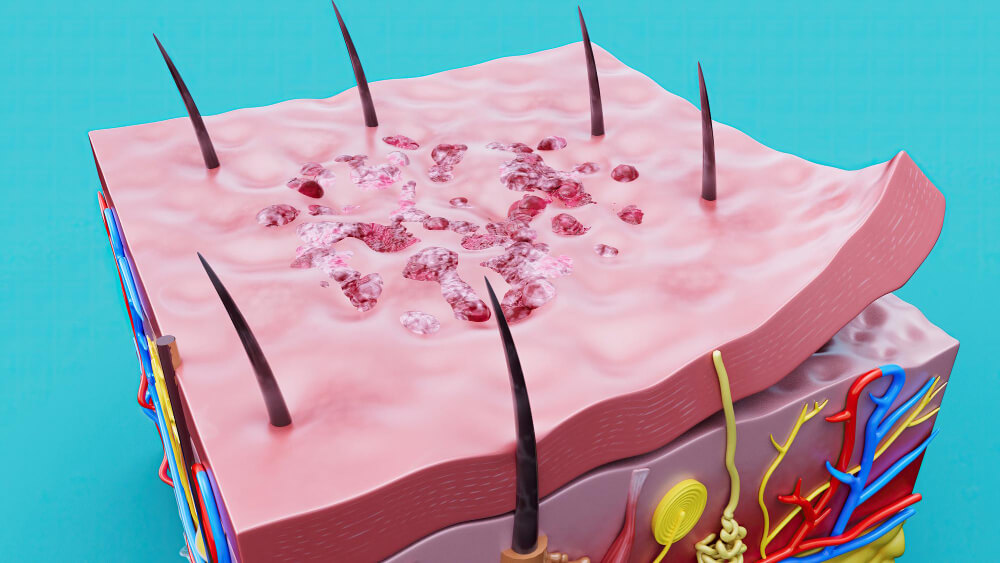
Psoriasis is often misunderstood as a surface-level skin problem, but its true origins run much deeper. Many people ask where psoriasis actually comes from, whether it is inherited, contagious, or caused by lifestyle choices. The reality is more complex. Psoriasis develops from a combination of genetic susceptibility, immune system dysfunction, and environmental triggers. Understanding these roots helps explain why psoriasis appears, why it behaves differently from person to person, and why it tends to be lifelong.
If you believe in this fight too, please consider supporting our mission through Donation. Together, we can make a difference.
Psoriasis Begins Inside the Immune System
At its core, psoriasis is an immune mediated condition. The immune system is designed to protect the body from infections and injuries. In people with psoriasis, this system becomes overactive and mistakenly targets healthy skin cells.
Specific immune cells release inflammatory signals that tell the skin to produce new cells much faster than normal. While healthy skin renews itself roughly every 28 to 30 days, psoriatic skin can renew in just a few days. This rapid turnover causes skin cells to pile up on the surface, forming thick, scaly patches.
This internal immune imbalance is the true starting point of psoriasis. The visible skin symptoms are simply the outward expression of an internal process.
The Role of Genetics
Psoriasis often runs in families, which shows that genetics play an important role. Certain genes affect how the immune system communicates and how skin cells grow. Having these genes does not guarantee that a person will develop psoriasis, but it increases the risk.
If one parent has psoriasis, the chance of developing it is higher. If both parents have psoriasis, the risk increases further. However, many people with psoriasis have no known family history. This tells us that genes alone do not cause psoriasis. They create vulnerability, not certainty.
Think of genetics as setting the stage, while other factors determine whether psoriasis actually appears.
Environmental and Lifestyle Triggers
For psoriasis to emerge, something usually activates the immune system. These activators are known as triggers. Triggers vary widely from person to person, which explains why psoriasis looks and behaves differently in each individual.
Common triggers include infections such as strep throat, which is particularly associated with sudden-onset psoriasis in younger people. Skin injuries like cuts, burns, surgical wounds, insect bites, or severe sunburn can also trigger psoriasis at the site of injury, a response known as the Koebner phenomenon.
Stress is one of the most powerful triggers. Emotional stress affects immune regulation and hormone levels, making the body more prone to inflammation. Certain medications, including lithium, beta blockers, and some blood pressure drugs, have also been linked to the onset of psoriasis.
Lifestyle factors such as smoking, excessive alcohol consumption, obesity, poor sleep, and chronic inflammation can further push the immune system toward disease expression.
Why Psoriasis Is Not Contagious
One of the most persistent myths about psoriasis is that it can be spread from person to person. This is not true. Psoriasis does not come from bacteria, viruses, or fungi, and it cannot be transmitted through touch, sharing personal items, or close contact.
Psoriasis originates from within the body. It is a self-driven immune condition, not an infection. Understanding this helps reduce stigma and fear around the condition.
The Connection Between Psoriasis and Other Conditions
Psoriasis does not exist in isolation. The same immune pathways involved in psoriasis are also linked to other inflammatory conditions. People with psoriasis are at higher risk of developing psoriatic arthritis, cardiovascular disease, metabolic syndrome, and certain mental health challenges.
This connection reinforces the idea that psoriasis comes from systemic inflammation rather than just skin damage. The skin is simply the most visible organ affected.
Why Psoriasis Can Start at Any Age
Psoriasis can begin in childhood, early adulthood, or later in life. There are two common peaks: one in the late teens to early thirties, and another in middle age.
The timing often depends on when genetic susceptibility meets a strong enough trigger. A major infection, prolonged stress, hormonal changes, or cumulative lifestyle factors can all contribute to when psoriasis first appears.
Why Psoriasis Becomes Chronic
Once psoriasis develops, the immune system tends to remain sensitive. Even when symptoms disappear, the underlying immune tendency usually remains. This is why psoriasis often follows a cycle of flare ups and remissions rather than a single episode.
Modern treatments focus on controlling immune activity, reducing inflammation, and restoring the skin barrier. While there is currently no permanent cure, many people achieve long-term control with proper management.
Final Thoughts
Psoriasis comes from a complex interaction between genetics, immune system dysfunction, and environmental triggers. It is not caused by poor hygiene, infections, or something you did wrong. The condition begins internally and shows itself externally through the skin.
Understanding where psoriasis comes from removes blame, reduces fear, and encourages informed care. With the right knowledge, medical support, and lifestyle awareness, psoriasis can be managed effectively, allowing individuals to live full and confident lives despite the condition.
NOTE: If you believe in this fight too, please consider supporting our mission through Donation. Together, we can make a difference.